 PhotoMind.appPhotoMind
Portrait Place Distance
A face, a gesture, and a person in a place ask for different amounts of space.
Story
Decide what the portrait should communicate first. This choice guides how much environment belongs around the person.
Distance
Change your position to balance person and surroundings. Then choose framing that preserves the intended relationship.
Edges
Avoid accidental cuts through important gestures. Keep enough room for the action to remain understandable.
Light
Check the light on the face or gesture that matters. A beautiful setting cannot compensate for missing human information.
Context
Retain an environmental element that explains where or why the moment happened. Remove unrelated clutter when possible.
Worked example
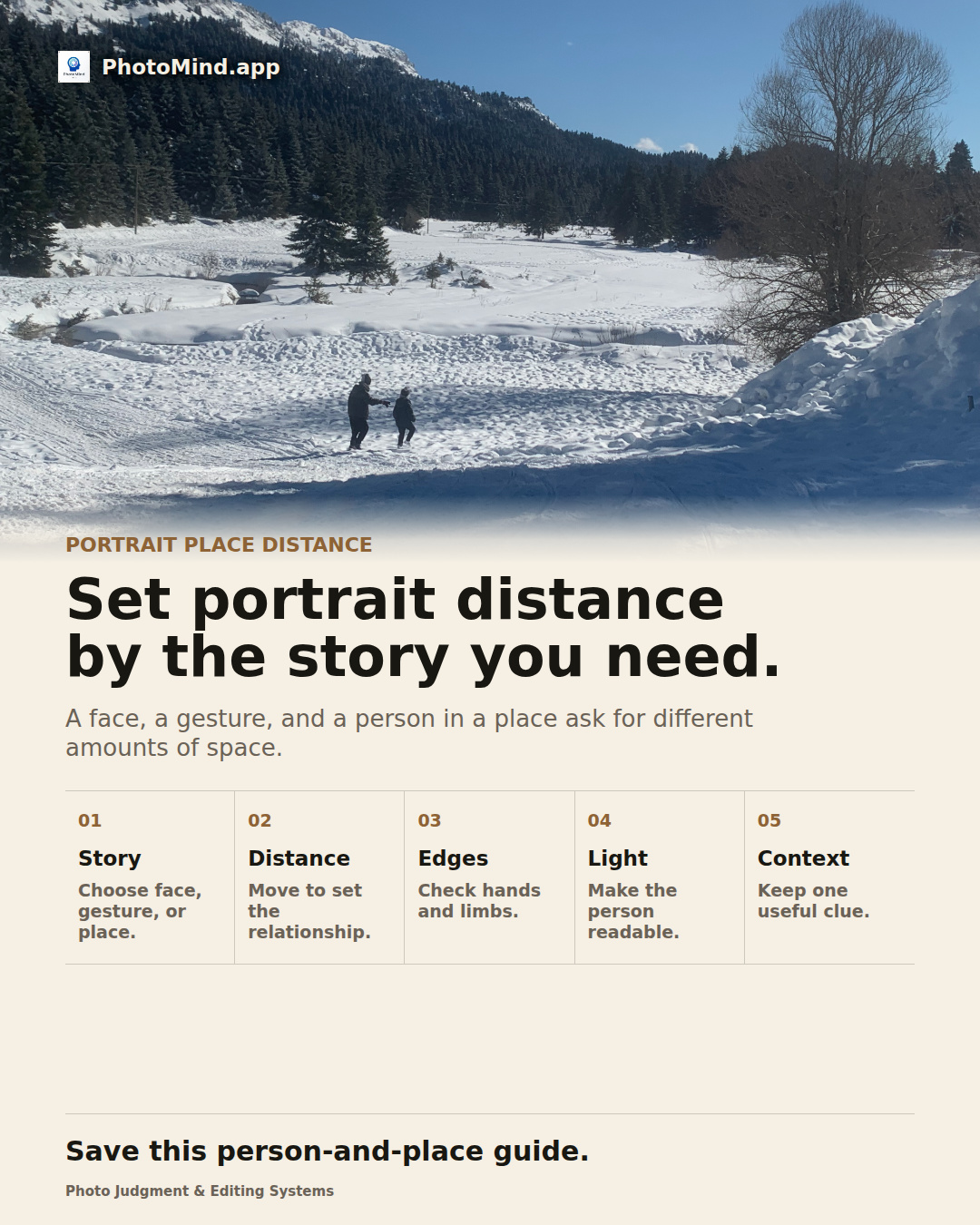
Two people crossing a snowy clearing gain scale and context from the landscape. A close crop might describe their gesture but lose the relationship with the open space. Keep the surroundings that explain the moment.
Keep in mind
Respect the subject's comfort and permission. A readable person does not require a close-up or direct eye contact.