 PhotoMind.appPhotoMind
Reflection Balance
A reflection can create symmetry, extend a shape, or introduce movement. Give it a clear role.
Role
Decide whether the reflection repeats the subject cleanly or changes it through ripples, color or distortion.
Balance
Compare a centered split with a version favoring the real subject. Symmetry is one option, not a requirement.
Edges
Check whether the top of the subject and the end of the reflection are cut awkwardly. Leave space where the shape needs it.
Light
Bright streaks can pull attention away from the subject. Adjust timing or framing before relying on local darkening.
Timing
For water reflections, compare stillness and movement. The most descriptive reflection may occur between disturbances.
Worked example
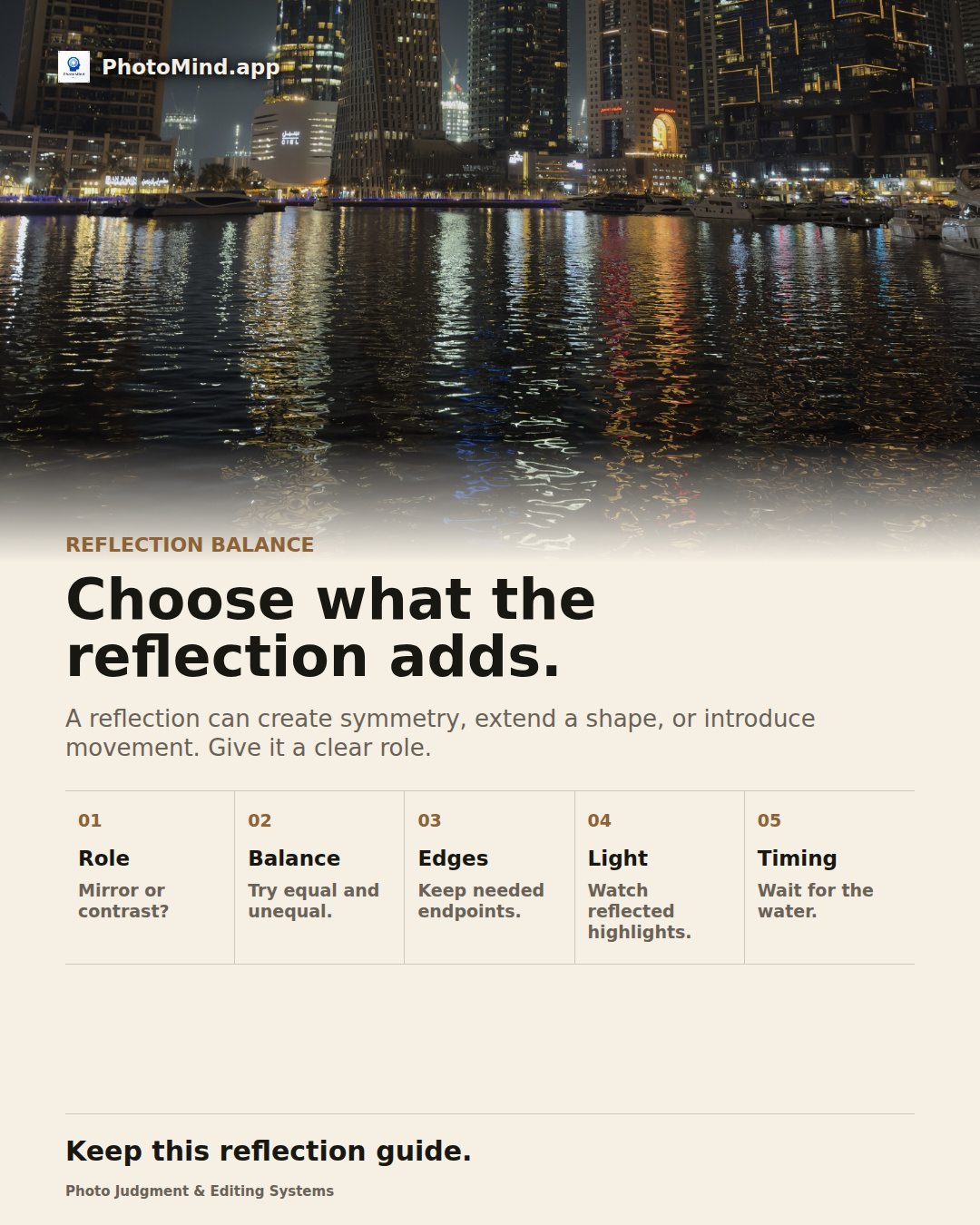
Lit towers reflected in water give you two versions of the skyline. A calm surface favors symmetry; broken light may be more useful as an atmospheric foreground. Choose which version tells the clearer story.
Keep in mind
Reflections may naturally differ in brightness and color. Editing both halves to match exactly can remove believable depth.