 PhotoMind.appPhotoMind
Foreground Entry Check
A near object should introduce depth, scale, or direction without blocking the photograph's reason.
Entry
Notice what grabs attention before anything else. Decide whether that entry point helps the image.
Path
Look for a visual route from the near element to the main subject. A foreground that traps attention may be too dominant.
Weight
Compare near-object size with the subject. Move or crop if the frame gives an unimportant element too much weight.
Gap
Inspect overlaps between the foreground and the essential subject. Preserve the detail that explains why the photograph exists.
Test
Compare a version without the foreground object. Keep it only if it adds something useful beyond visual decoration.
Worked example
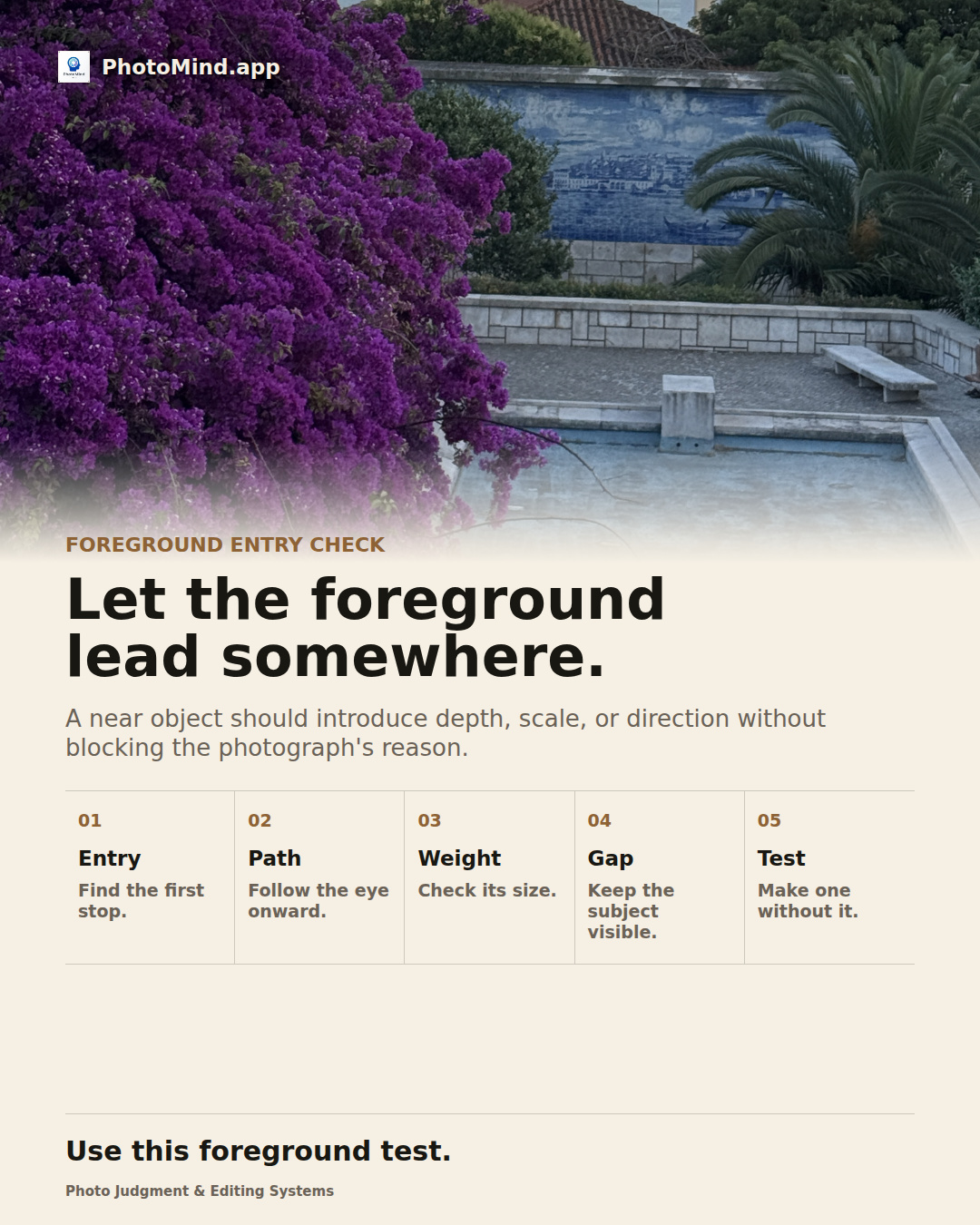
Flowers beside a passage can invite the eye toward the buildings beyond. If the flowers fill most of the image and hide the route, they have become the subject instead. Either choice can work when it is deliberate.
Keep in mind
A foreground detail can be the main subject. This check applies when you intend it to support something farther away.